A private studio for text-based images.

Image to ASCII Converter — Free Online Tool

Turn any photo into detailed, copy-ready ASCII art. Shape the texture, control the width and export in seconds.

Start with an image
Browser-local converterEMPTY
Your image stays on this device. Nothing is uploaded.
ASCII exampleSelect an image to replace it
                 ..,:;=+*#%%@@%%#*+=;:,..
             .:=*%@@@@@@@@@@@@@@@@@@%*=:
           :+%@@@@@@@@@@@@@@@@@@@@@@@@@@%+:
         .*@@@@@@@@@@%#*+====+*#%@@@@@@@@@@*.
        =@@@@@@@@%*=:.          .:=*%@@@@@@@@=
       #@@@@@@@#=.                  .=#@@@@@@@#
      %@@@@@@%=.      .:------:.      .=%@@@@@@%
     *@@@@@@*.      :+%@@@@@@@@%+:      .*@@@@@@*
     @@@@@@+       =@@@@%#**#%@@@@=       +@@@@@@
    :@@@@@@.      +@@@*:      :*@@@+      .@@@@@@:
    =@@@@@%       %@@+   .::.   +@@%       %@@@@@=
    =@@@@@%       %@@:  :%@@%:  :@@%       %@@@@@=
    :@@@@@@.      +@@@+..=**=..+@@@+      .@@@@@@:
     @@@@@@+       =@@@@%####%@@@@=       +@@@@@@
     *@@@@@@*.      :+%@@@@@@@@%+:      .*@@@@@@*
      %@@@@@@%=.       .:-==-:.       .=%@@@@@@%
       #@@@@@@@#=.                  .=#@@@@@@@#
        =@@@@@@@@%*=:.          .:=*%@@@@@@@@=
         .*@@@@@@@@@@%#*+====+*#%@@@@@@@@@@*.
           :+%@@@@@@@@@@@@@@@@@@@@@@@@@@%+:
             .:=*%@@@@@@@@@@@@@@@@@@%*=:
                 ..,:;=+*#%%@@%%#*+=;:,..
Free to use. Runs in your browser. JPG · PNG · WebP. Copy or download

Every image is already a field of light and dark. This tool simply gives those tones a new alphabet.

Pictures become text without leaving your browser.

Pic to ASCII—also described as an image to ASCII converter—turns the light and dark areas of a photo into a grid of text characters. It is useful when you want the visual identity of an image but need an output that can be copied, edited, committed with code or posted anywhere plain text works.

The converter keeps the interaction direct: choose a local image, select how many levels of character detail you want, set the line width and inspect the result. Nothing is uploaded to an application server. When the texture feels right, copy the characters or save the same text as a UTF-8 file.

Pixels in. Characters out.

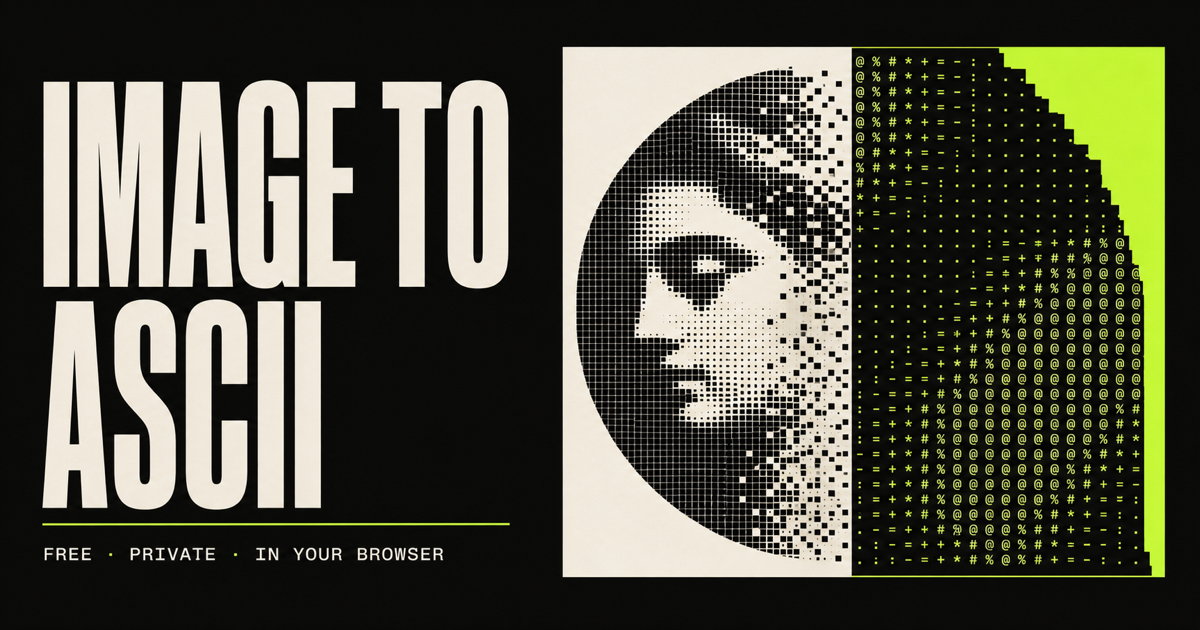
Your browser shrinks the image into a grid, measures the brightness of each cell and swaps that tone for a character with matching visual weight.

  1. Choose a photo

    Drop a JPG, PNG or WebP image. The source file stays in your browser.

  2. Tune the texture

    Pick a character set, adjust output width and choose the preview background.

  3. Use the result

    Copy the exact text or download a clean UTF-8 file for anywhere you type.

Why one pixel becomes one character.

ASCII art does not trace every edge. It rebuilds the image as a text grid whose characters carry different amounts of visual ink.

Reduce the image to the output grid

A source photo may contain millions of pixels, but a terminal or README needs tens or hundreds of characters per line. The browser draws a reduced version to an off-screen Canvas at the selected width. Height is calculated from the original aspect ratio and corrected for the fact that text cells are usually taller than they are wide.

Translate color into perceived brightness

Each sampled color is converted to luminance. Green contributes more to perceived brightness than blue, so the calculation is not a simple average of red, green and blue values. Transparent pixels are first composited against the active background to keep light and dark previews consistent.

Match brightness to visual weight

Dense characters such as @ or # cover more of a text cell and represent darker tones on a light background. A period covers less area, while a space leaves the cell empty and therefore appears brightest. Inverted mode reverses that mapping for a dark output surface.

Browser tool, command line or image editor?

The best approach depends on whether you value immediate feedback, automation or manual visual composition.

Pic to ASCII in the browser

Best for quick, private experiments. You see the source and result together, adjust density and width without remembering flags, then copy the output. Processing stays on the device and there is no package to install. It is intentionally focused on a single image at a time and plain-text output.

Command-line converters

Best for repeatable scripts, batch jobs and pipelines. A CLI can be powerful when you already work in a terminal, but flags, fonts and preview behavior vary between packages. You may need several runs to find a width and character ramp that fits the final destination.

Photoshop or design software

Best when ASCII is one layer inside a larger poster or illustration. Editors provide typography, masks and precise composition, but the result is commonly an image rather than text you can paste into a terminal or code block. Use the converter when editable characters are the deliverable.

Source pixels enter the browser canvas and never travel to a Pic to ASCII application server.

The conversion path stays on your device.

Selecting a file gives the page temporary browser access to that file. Browser image APIs decode it, an off-screen Canvas creates the smaller pixel grid, and JavaScript maps luminance values to the selected character set. The original JPG, PNG or WebP bytes are not posted to a Pic to ASCII backend.

This architecture reduces waiting time and makes the privacy claim verifiable in the product design. It also means conversion capacity depends on your device and browser. The 15 MB input limit and 40–200 character width range keep work bounded while preserving enough detail for common terminals, documents and community posts.

Keep the color or learn to shape the text.

Use the adjacent converter when RGB is part of the artwork, or read the practical guides before choosing a workflow and final width.

How to make ASCII art

Choose a method, ramp, width and background, then edit the output for its real destination.

Read the tutorial →

Best converters by workflow

Compare browser, command-line and drawing-first tools using disclosed criteria instead of a fake score.

Read the comparison →

One converter. Plenty of places to put the result.

DEVELOPERS

Make READMEs and terminals feel like yours.

Create headers for GitHub projects, CLI splash screens, code comments and terminal banners without stopping to configure a command-line package. Character width makes it easier to fit the result inside a README code block or a known terminal column count, while plain-text output stays easy to version, review and edit by hand.

CREATORS

Turn familiar images into unfamiliar texture.

Explore graphic treatments for posters, social posts, zines and layout experiments with direct control over character density. A sparse character set creates bold blocks and silhouettes; a longer gradient preserves more tonal steps. Copy the text into a design workflow or use the preview as a reference for a larger composition.

COMMUNITIES

Create text art that survives copy and paste.

Make signatures, reactions and compact illustrations for Discord, Reddit, Twitch or any place where plain text is the common language. Test a narrower width before posting because platforms wrap long lines differently, and keep the result inside a code block when the community supports monospaced formatting.

Before you drop the image.

Does Pic to ASCII upload my image?

No. The converter decodes and processes your image with browser APIs on your device. The source image is not sent to an application server.

Which image formats work?

You can use JPG, PNG and WebP images up to 15 MB. Transparent PNG and WebP pixels are composited against the active preview background.

Why does output width use characters instead of pixels?

ASCII art is a text grid. Character width tells you exactly how many symbols each line contains, which makes the result easier to fit into terminals, documents and posts.

Can I copy the result anywhere?

Yes. The result is plain Unicode text. Use Copy text for your clipboard or download the same output as a UTF-8 .txt file.